Information, Communication and Technology (ICT)
Discover how Marymount Convent School uses ICT to boost students' creativity, digital skills, and problem-solving through coding, AI, and blended learning programmes.
Last updated 11 June 2026
Our Philosophy
ICT @ MCS aims to enhance and individualise learners’ educational experience, helping them to enjoy learning, improve their performance, and raise standards in literacy, numeracy and other areas of study. It aims to elevate students’ creativity, developing their digital and visual literacies by providing them with an appropriate blend of non-technological and online resources, extending their learning beyond the boundaries of school.
Our Approach
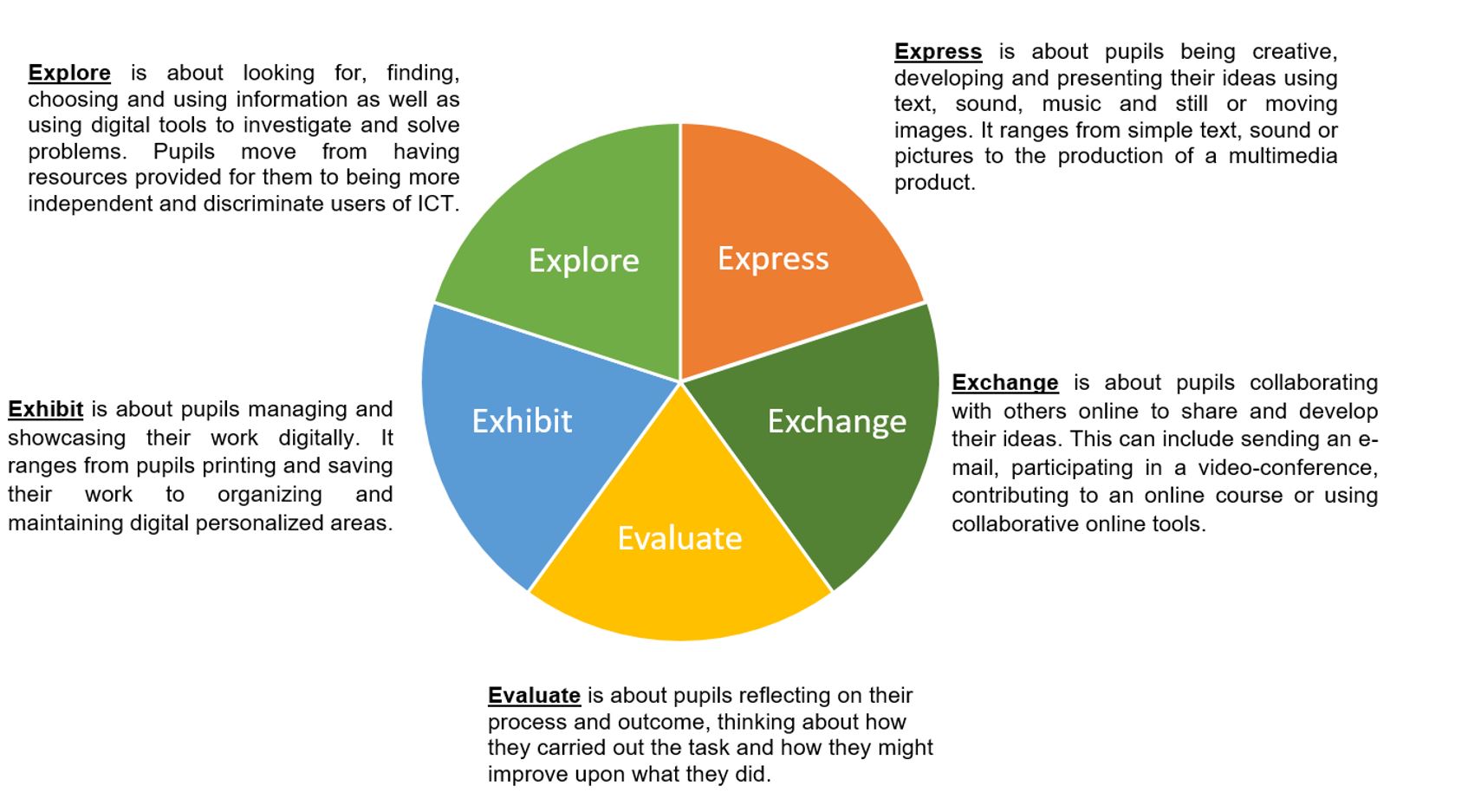
ICT in Marymount Convent School aims to help students develop the skills needed, using the 5Es, to be active in the global knowledge economy.
Our Department Programmes
Digital Literacy @ MCS
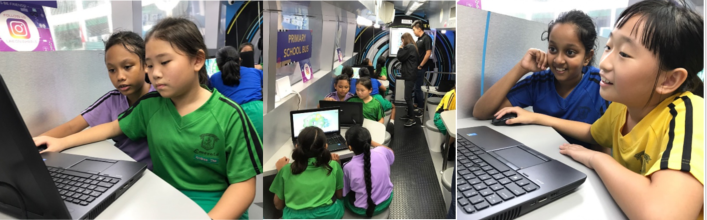
To prepare our students for the Digital Century, we expose students to Coding and Programming which aim to promote their computational thinking and develop their problem-solving skills.
MCS partnered Infocomm Media Development Authority (IMDA) to bring programmes such as the Code For Fun (CFF) and A.I. For Fun (AIFF) for our students. These programmes anchor on the academic learning of related concepts using visual-based programming language to create a coding experience for the students.
Shaping the Future: Our Digital Literacy & ICT Framework
At our school, technology is more than just a tool—it is a catalyst for imagination, collaboration, and critical thinking. We aim to transform our students from passive consumers of technology into agile, responsible, and creative digital trailblazers.
Our Learning Approach: From Curiosity to Competence
We cultivate digital fluency through a structured, hands-on pathway designed for every stage of our students' primary school journey:
Inquiry-Based Exploration: Practical tasks that encourage students to experiment, troubleshoot, and discover technological concepts naturally.
Progressive SLS Integration: Age-appropriate Digital Literacy modules seamlessly woven into the Student Learning Space (SLS) across all 6 levels, ensuring skills grow alongside our students from year to year.
Future-Ready Coding & AI Partnerships: In collaboration with the Infocomm Media Development Authority (IMDA), we bring cutting-edge programmes like Code For Fun (CFF) and A.I. For Fun (AIFF) to our students. By leveraging visual-based programming languages, these initiatives bring academic concepts to life through exciting, hands-on coding experiences.
The 3 Dimensions of Our Student Digital Profile
Our ICT curriculum focuses on building practical skills and smart mindsets across three core areas:
1. Self-Driven & Connected Learners
We empower students to take charge of their own learning and work well with others. Our learners are:
Autonomous: Confident in setting personal goals, pacing their work, and using digital tools and resources to find the information they need.
Collaborative: Adept at using online tools to share knowledge, brainstorm together, and work on team projects.
2. Critical & Grounded Digital Citizens
We equip students with the safety skills and smart habits required to navigate the online world responsibly. Our learners are trained to:
Evaluate with Precision: Look at online content with a critical eye, learning to sift through information, find what is relevant, and separate fact from fiction.
Practice Cyber Wellness: Use technology in a safe, respectful, and discerning manner, keeping their well-being and online safety a top priority.
3. Practical Problem-Solvers & Creators
We bridge the gap between learning tech and using tech. Our students learn to apply their digital skills to real-world tasks. They are trained to:
Discover & Develop: Identify everyday, real-world needs and work out practical digital solutions to address them.
Build with Confidence: Gain hands-on experience using a variety of software, applications, and digital tools to create projects, presentations, and tangible outcomes.